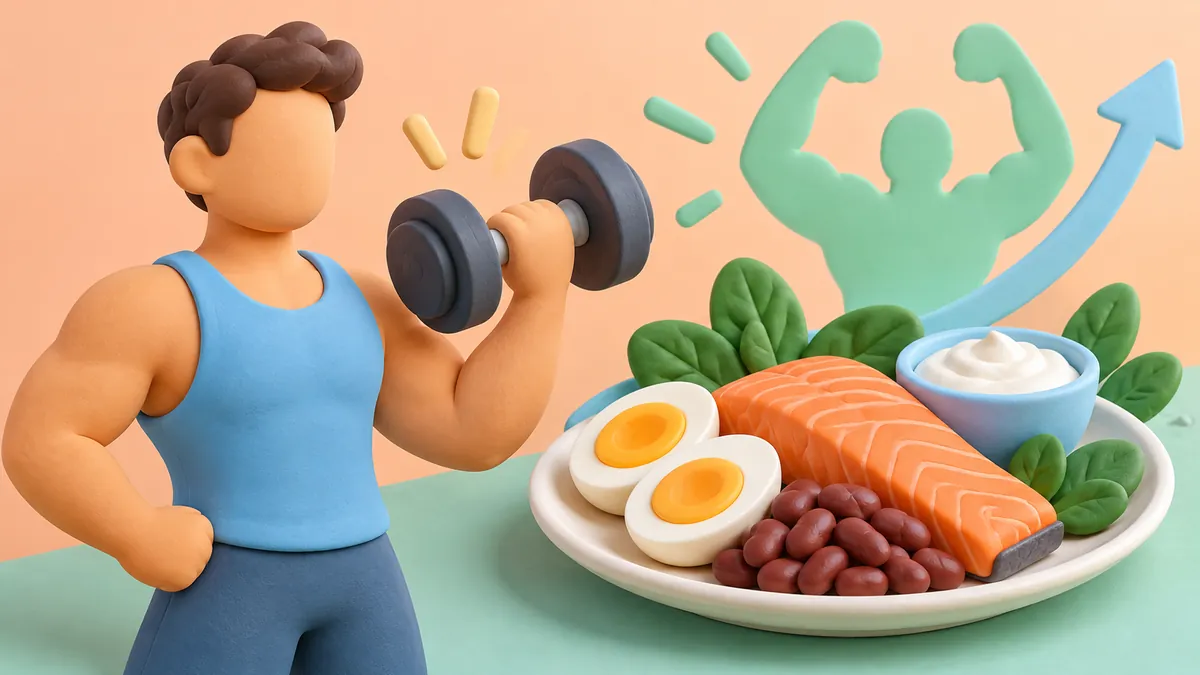
Protein is the macronutrient that decides what your training adds — or what your diet keeps. Eat enough and lifting builds muscle; eat too little and the same training spins its wheels. The science of "how much" is unusually clear, and this guide shows you how to translate it into actual meals.
Quick Answer
For people who lift weights and want to build or preserve muscle:
- 1.6–2.2 g of protein per kg of body weight per day
- Distribute across 3–5 meals, with 20–40 g of protein each
- A modest surplus (+250 kcal/day) for gain; protein stays the same in a cut
Pop your number into our Macro Calculator and the rest of the macros fall out.
Why Protein Is Different from Carbs and Fat
Protein supplies amino acids, the building blocks of muscle, organs, enzymes and hormones. Two amino-acid behaviours matter for training:
- The body doesn't store amino acids for later. You need a regular supply throughout the day.
- Among the macros, protein is the most filling and the most thermogenic — about 20–30% of its calories are burned just digesting it.
Net effect: hitting protein supports muscle growth, makes a calorie deficit easier to follow, and quietly raises daily energy expenditure.
The Research-Backed Range
A widely cited meta-analysis found muscle-protein synthesis maxes out around 1.6 g per kg of body weight per day for resistance-trained adults, with diminishing returns up to ~2.2 g/kg. Use:
| Goal | Suggested intake | |---|---| | General health | 1.2–1.6 g/kg | | Building muscle | 1.6–2.0 g/kg | | Cutting (preserving muscle) | 1.8–2.4 g/kg | | Older adults (50+) | 1.6–2.2 g/kg |
Lean body mass is the more precise denominator, but total body weight is close enough for most people. If you have a body-fat estimate from our Body Fat Calculator, feel free to use lean mass; otherwise total weight works.
Per-Meal Protein
Distribution matters less than total — but a little:
- 20–40 g of protein per meal is the comfortable range that fully stimulates muscle protein synthesis
- 3–5 protein-anchored meals per day for most people
- One late evening protein meal (or casein-rich food) supports overnight recovery
A 75 kg lifter targeting 150 g/day → four meals at ~38 g each, or three meals at 40 g + one snack at 30 g. Either works.
What 30 g of Protein Actually Looks Like
Easy reference for building meals:
- 100 g cooked chicken or turkey breast ≈ 30 g
- 100 g cooked beef or pork (lean) ≈ 25–28 g
- 100 g cooked salmon ≈ 22–24 g
- 1 cup (240 g) Greek yoghurt (5% fat) ≈ 20–22 g
- 3 large eggs ≈ 18 g
- 30 g whey protein powder ≈ 22–25 g
- 100 g tofu (firm) ≈ 15 g
- 1 cup cooked lentils ≈ 18 g
- 1 cup cottage cheese ≈ 25 g
If you struggle to reach your number from food alone, whey or plant-based protein powders are a clean, cheap top-up — they are food in powder form, not a steroid.
Protein During a Cut vs. a Bulk
The biggest mistake is dropping protein when cutting because total calories drop. Protein needs go up, not down, in a deficit.
| Phase | Protein per kg | Why | |---|---|---| | Maintenance | 1.6–1.8 | Supports recovery and satiety | | Lean bulk (+250 kcal) | 1.6–2.0 | Slight extra raw materials | | Cut (−400 to −700 kcal) | 1.8–2.4 | Spare muscle, control hunger |
In practice: a 75 kg lifter usually keeps protein at 140–160 g/day regardless of phase, and swings the cut/bulk decision through carbs and fat.
How to Build a Protein-Anchored Plate
A simple visual rule for every meal:
- A palm or two of protein
- A fist of starchy carbs (rice, potato, oats, bread)
- Half a plate of vegetables
- A thumb of fats (oil, nuts, cheese)
Across four such meals, a 75 kg lifter hits ~150 g protein and ~2,200–2,500 kcal almost automatically — no tracker needed once the templates are set.
Animal vs. Plant Protein
Both work; the conversation deserves nuance.
Animal protein
- Higher leucine content per gram — the amino acid most strongly tied to muscle-protein synthesis
- Complete amino acid profile in single foods (eggs, meat, fish, dairy)
- Easier to hit the target in fewer calories — leaner cuts run 4–6 kcal per gram of protein
Plant protein
- Slightly lower leucine, but soy and pea proteins close most of the gap
- Mixing sources (legumes + grains, beans + rice) produces complete amino-acid intake
- Generally needs 10–20% higher total intake to match animal-based muscle outcomes
- Wins on fibre, micronutrients and environmental footprint
For most plant-based lifters, the practical move is +15% protein target plus regular use of soy or pea protein powder.
Protein Timing — What Actually Matters
The old "30-minute anabolic window" turned out to be much wider than originally claimed. Current evidence supports:
- Total daily intake is the biggest lever
- Spreading across 3–5 meals is mildly better than 1–2 large meals
- A protein-rich meal within 1–2 hours of training is enough; not 30 minutes
- Overnight gap doesn't need supplementation for most people; a normal dinner suffices
The lifters who post the biggest gains aren't timing protein to the minute — they're hitting their total day after day for months.
Supplements: Whey, Casein, Plant Powders
Supplements are food in powder form. Use them when whole food is impractical, not as a substitute.
- Whey — fast-digesting, leucine-rich, cheap. Default supplement for most lifters.
- Casein — slow-digesting milk protein. Useful pre-bed for some; not essential.
- Soy protein — best plant option for muscle building; complete amino profile.
- Pea protein — close second to soy; good for those avoiding soy.
- Blends — pea + rice covers amino acid gaps better than either alone.
Avoid pricey "fancy" protein supplements (BCAAs alone, EAAs alone, "muscle-building stacks"). Whole protein already contains those amino acids.
A Real Day at 150 g Protein
Concrete example for a 75 kg lifter, 2,200 kcal cut day:
- Breakfast — 200 g Greek yoghurt (5%, ~22 g) + 50 g oats + banana + 30 g whey shake (~22 g) = ~44 g protein
- Lunch — 150 g grilled chicken (~45 g) + rice + vegetables + olive oil = ~45 g
- Snack — 200 g cottage cheese (~25 g) + apple = ~25 g
- Dinner — 150 g salmon (~33 g) + sweet potato + salad = ~33 g
Total: ~147 g protein, four anchored meals, no chase-down at 9 pm.
Common Mistakes
- Counting "high-protein" foods that are mostly fat. Bacon, peanut butter and cheese have protein but more fat. They contribute, but they're not protein engines.
- Slamming all protein at dinner. It still counts, but spreading it improves muscle protein synthesis and hunger.
- Quitting whey because "supplements are unnecessary." Powders are cheap, convenient and clean. Use them when whole food is impractical.
- Forgetting plant eaters can hit the same numbers. Combinations of legumes, soy, grains and high-protein plant products (tempeh, seitan, plant powders) work well — they just need a bit more attention.
- Cycling protein up and down by phase. Pick a number; hold it; let carbs and fat absorb the calorie changes.
Frequently Asked Questions
Is more protein always better?
No. Beyond about 2.2–2.4 g/kg, extra protein displaces calories that would have built more energy or recovery into other macros. Higher intakes are not harmful in healthy adults, but they are inefficient.
Does protein damage kidneys?
In healthy adults, high protein does not impair kidney function. People with pre-existing kidney disease should follow a doctor's plan.
Plant protein vs. animal protein?
Animal proteins have a higher leucine content per serving and a more complete amino-acid profile. Plant proteins reach the same outcomes with slightly larger total amounts and mixing sources (e.g., grains + legumes). A daily 20–40 g shake of soy or pea protein closes most of the gap.
When should I eat protein around training?
The "anabolic window" is wider than tradition says. Having a protein-rich meal within 1–2 hours either side of training is plenty. Total daily intake matters more than timing.
Do I need supplements like BCAAs?
If you already hit your daily protein target, no. BCAAs are part of complete proteins; you already get them.
Bottom Line
Set your protein target once, lock it in, and let the other macros flex. For most lifters:
- Pick your number. 1.6–2.2 g per kg → use our Macro Calculator.
- Spread it across 3–5 meals, 20–40 g each.
- Don't drop protein in a cut. Keep it; cut elsewhere.
- Train hard and recover. Protein supports the work; the work creates the demand.
Health and fitness calculations are estimates only and not medical advice. If you have kidney disease, liver disease, or other relevant conditions, consult a healthcare provider before significantly raising protein intake.