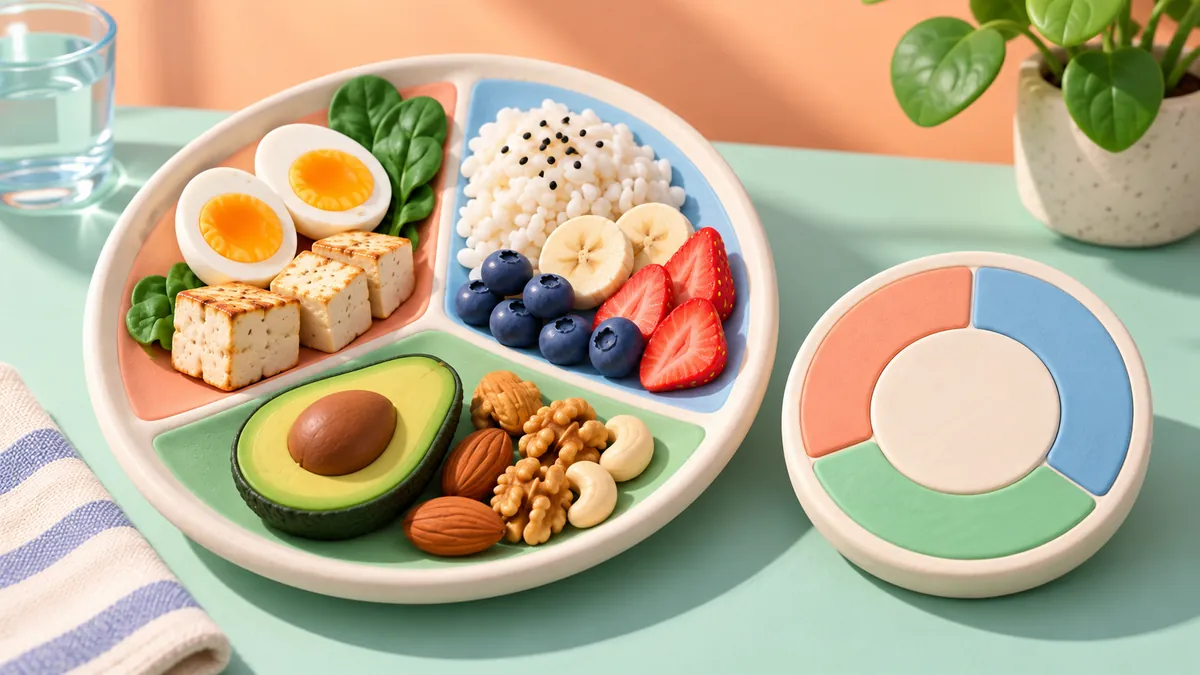
Macro tracking sounds tedious until you discover it takes about five minutes a day once your routine is dialled in. This tutorial shows you how to track without making it a hobby, and how to graduate to mental tracking once you've internalised the patterns.
Quick Answer
Three steps:
- Pick your targets with our Macro Calculator.
- Log meals in an app (MyFitnessPal, Cronometer, MacroFactor, etc.) for 2–4 weeks.
- Graduate to plate templates — most people don't need to log forever.
The point is calibrated portion awareness, not perfect logging.
Step 1: Lock Targets First
Don't start logging without a destination.
- Compute calories with our Calorie Calculator
- Set protein (1.6–2.2 g/kg), fat (0.6–1.0 g/kg), carbs fill the rest — our Macro Calculator does it all
For a 70 kg cutter on 2,000 kcal: 140 P / 65 F / 180 C.
Step 2: Pick a Tracker
Any modern tracker works. Three honest options:
- MyFitnessPal — huge database, social, ads. Beware user-submitted entries.
- Cronometer — micronutrient-rich, very accurate database.
- MacroFactor — adaptive calorie target, fewer database errors but paid.
The "best" tracker is the one you'll actually open daily.
Step 3: Use a Kitchen Scale for the First Two Weeks
Eye-balling portions is systematically off by 15–30% — almost always under-counting. A €15 kitchen scale fixes that.
- Weigh foods raw when possible (cooked weight changes with water loss).
- Use grams, not cups.
- Save common foods as favourites to speed entry.
After two weeks you'll know what 30 g of oats or 150 g of chicken looks like.
Step 4: A Sample Logging Day
For our 70 kg cutter at 2,000 kcal:
- Breakfast (455 kcal): 60 g oats + 200 g Greek yoghurt (5%) + 1 banana
- Lunch (650 kcal): 150 g chicken, 200 g cooked rice, 100 g broccoli, 1 tbsp olive oil
- Snack (300 kcal): 30 g almonds + 1 apple
- Dinner (595 kcal): 150 g salmon, 250 g potato, large salad with vinaigrette
Total: ~2,000 kcal, ~140 g protein. Log it once; copy/paste tomorrow.
How to Speed Up Daily Logging
The first week of tracking is slow because you're building the database. The second week is fast because the database is doing the work. Three habits that take logging from 20 minutes to under five:
- Save 6–10 "meal sets" for breakfasts, lunches and dinners you eat regularly. One tap logs the entire combination — oats + yoghurt + banana, for example.
- Pre-log the day the night before, then adjust as you eat. Knowing the macro picture in advance prevents the dinner-time math scramble.
- Use barcode scanning for packaged foods rather than searching the database. The match is instant and verified.
- Bulk-cook proteins on weekends. A single 1 kg portion of chicken or beef, weighed and divided into 4–5 portions, removes the "weigh it again" step from weeknight tracking.
- Use the "copy yesterday" button when meals repeat. Most days are 70% the same anyway.
Once these habits land, daily logging settles to roughly the time it takes to brush your teeth — and produces far better data than memory ever could.
Common Tracker Errors to Watch For
Even a careful tracker collects small errors that drift into noticeable ones over a week:
- Cooked vs raw weight confusion — 100 g raw chicken cooks down to ~70 g; logging 100 g cooked when the database means raw costs about 60 kcal per portion.
- Sauce, dressing and cooking oil are the most common silent additions. A "small drizzle" of olive oil is often 15–20 ml = 130–180 kcal.
- Coffee creamer and milk in tea add up at 2–4 cups/day — easily 100–200 kcal untracked.
- "Reduced" or "light" labelled foods that compensate with sugar or starch.
- Restaurant entries with the same name — "Chicken Caesar" varies by 300+ kcal between chains.
The most precise tracker is the one that catches these patterns and corrects them quickly. Perfect is impossible; consistent is achievable.
Step 5: Graduate to Plate Templates
After 2–4 weeks of logging, most people can stop and use plate visuals:
- A palm or two of protein at each meal
- A fist of starchy carbs when active, half a fist when not
- Half the plate vegetables
- A thumb of fats (oil, nuts, dressing)
Four such meals usually land within ±10% of structured macros. Log again whenever the scale stops trending or goals change.
Common Pitfalls and Quick Fixes
- "Hidden" calories from drinks, sauces, oils. Track them. Olive oil drizzles alone often add 200 kcal/day untracked.
- Restaurant meals. Estimate at +25% over your guess. Restaurant macros are routinely under-stated.
- Database errors. Verified entries (with a green check) are better. Calorie counts vary 30%+ between user-submitted entries for the same food.
- Cooked vs raw weight. A label saying "150 g chicken" usually means raw; cooked it weighs ~110 g. Either be consistent or use the cooked entries.
Tracking Protein Only — The Lazy Option
If full tracking feels heavy, tracking just protein captures 80% of the benefit:
- Plan a high-protein source at each meal
- Log only protein grams (most apps let you filter)
- Eyeball calories with plate templates
You'll usually land within ±150 kcal of a full plan while staying consistent on the macro that matters most.
Common Mistakes
- Logging perfectly on weekdays, not weekends. Most over-eats happen Friday–Sunday. Logging only Mon–Thu lies to you.
- Hitting calories but missing protein. The scale moves either way, but body composition doesn't.
- Quitting on bad days. A 200 kcal over-shoot is forgettable; quitting tracking for the week is not.
- Chasing perfection. Within ±10% of targets is plenty for almost any goal.
Frequently Asked Questions
Do I really need to track forever?
No. Two to four weeks of logging usually calibrates plate visuals well enough for the next 6–12 months. Re-log briefly when goals or weight change meaningfully.
What about eating out?
Pre-decide your option, ask for sauces on the side, default to grilled protein + carb + vegetables. Estimate +25% on calories vs. menu listings.
Do I count vegetables and fruit?
Starchy carbs and fruit yes — they contribute meaningfully. Non-starchy vegetables (greens, peppers, cucumber, broccoli) you can mostly ignore.
Do alcohol calories count?
Yes — 7 kcal per gram, processed differently but still real. Alcohol also blunts fat oxidation, so it tends to lock in fat storage from other meals that day.
Should I track on a re-feed or refeed day?
For people prone to over-eating on planned higher days, yes. For everyone else, looser tracking on one day a week is fine.
Bottom Line
The goal of tracking is portion calibration, not a never-ending spreadsheet.
- Get your targets → Calorie Calculator + Macro Calculator.
- Pick a tracker; weigh foods raw with a kitchen scale.
- Log fully for 2–4 weeks, then graduate to plate templates.
- Track protein as the minimum effort version when you don't have bandwidth for full logging.
- Re-log briefly when goals change or progress stalls.
Tracking is a temporary skill investment. Once you have it, you can choose how much logging to keep.
Health and fitness calculations are estimates only and not medical advice. If you have a history of disordered eating, talk to a clinician before starting macro tracking — for some people, food logging is contraindicated.